
- Home
- Additive manufacture
Additive manufacturePrinted metal structure, shaped by the loads it carries
Overview
Metal 3D printing lets us build shapes that machining and casting cannot: organic load paths, internal channels and lattice cores. The result is lighter, stronger parts with fewer joints, made faster.
Why print a satellite
Additive manufacturing changes what we can design, not just how we make it.
Lighter
Material goes only where loads flow. Every kilogram saved is a kilogram of payload or propellant.
Fewer parts
Assemblies of brackets, fasteners and fittings become single printed parts with fewer failure points.
Faster iteration
Design changes move from model to hardware in days, so testing drives the design rather than trailing it.
How lattice density trades mass for stiffness
Replace a solid part with a lattice and you save mass, but you also lose stiffness. How much depends on the lattice architecture. Drag the slider to compare.
Idealised Gibson–Ashby scaling with prefactors set to 1: stiffness proportional to density for stretch-dominated lattices and to density squared for bending-dominated lattices.
Process
Laser powder bed fusion, layer by layer.
A thin layer of metal powder is spread across a build plate and a laser melts the cross-section of the part. The plate drops, a new layer is spread, and the process repeats thousands of times. Features such as internal cooling channels, integrated propellant lines and lattice cores are built in rather than assembled later.
After printing, parts are stress-relieved, removed from the plate, and densified by hot isostatic pressing where needed. Critical interfaces are finish-machined to tight tolerances.
Materials
Matched to the job each part does.
- Titanium alloy (Ti-6Al-4V): high strength-to-weight and low thermal expansion for primary structure and fittings.
- Aluminium alloys (such as AlSi10Mg): low density and good thermal conductivity for brackets, housings and heat-spreading parts.
- Nickel superalloys (such as Inconel 718): strength at temperature for components near thrusters and power electronics.
Topology optimisation
Let the loads draw the part.
We define where a part attaches, what loads it sees at launch and in orbit, and the space it may occupy. Optimisation software then removes material that carries little load, leaving an efficient, often organic-looking structure. Printing makes these shapes buildable without compromise.
Qualification
Confidence before flight.
Printed parts are only as good as the process behind them. We control powder quality and machine parameters, build test coupons alongside flight parts, inspect parts with computed tomography to find internal porosity, and verify performance through vibration, thermal and structural testing. Each step creates traceable records for customers and regulators.
-
Build
Laser powder bed fusion builds dense metal parts layer by layer, with channels and lattices built in.
-
Optimise
Topology optimisation leaves material only where the loads flow.
-
Inspect
CT scanning, coupon testing and process control give confidence before flight.
-
Assemble
Fewer parts, fewer joints and fewer failure points in the finished platform.
-
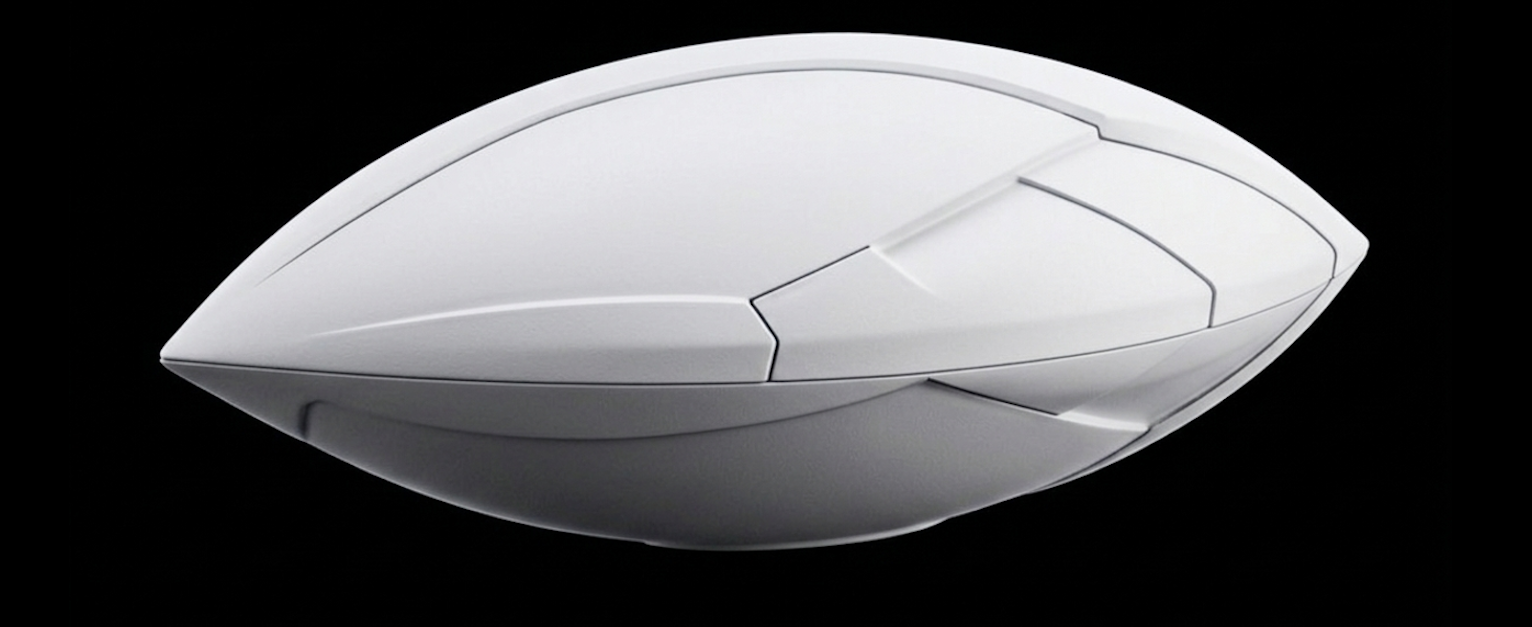
Fly
Lighter structure means more mass for payload and propellant.
Questions
Which process does OrbitalX use?
The main process is laser powder bed fusion, where a laser melts fine metal powder layer by layer to build dense, precise parts.
Which materials are used?
Typical choices are titanium alloy Ti-6Al-4V for high strength-to-weight parts, aluminium alloys such as AlSi10Mg for lightweight structure, and nickel superalloys for parts that run hot.
Are printed parts reliable enough for space?
Yes, when the process is controlled and parts are qualified. That includes powder and machine controls, post-processing such as hot isostatic pressing, CT inspection for internal defects, and testing of coupons built alongside flight parts.
How does printing reduce mass?
Topology optimisation removes material where it carries little load, lattice infill replaces solid sections, and consolidating assemblies into single parts removes fasteners and joints.
Related technology
- Saucer-shaped satellitesWhat disc-shaped spacecraft are, why the shape works, and where HALO fits.
- HALO vehicleThe saucer-shaped bus: geometry, structure, subsystems and payload bays.
- Ion propulsionElectric thrusters for station-keeping, drag make-up and repositioning.
- MetamaterialsEngineered structures that steer beams, manage heat and carry load.
- Systems architectureHow power, control, data and payloads fit together on one platform.
Work with our manufacturing team
Suppliers and research partners in additive manufacturing, we'd like to hear from you.